News

The report provides a unique quantification of the costs in terms of lost growth opportunities and an estimate of what societies, economies, and communities would gain if the gender gap in agriculture is addressed.
Agricultural production system

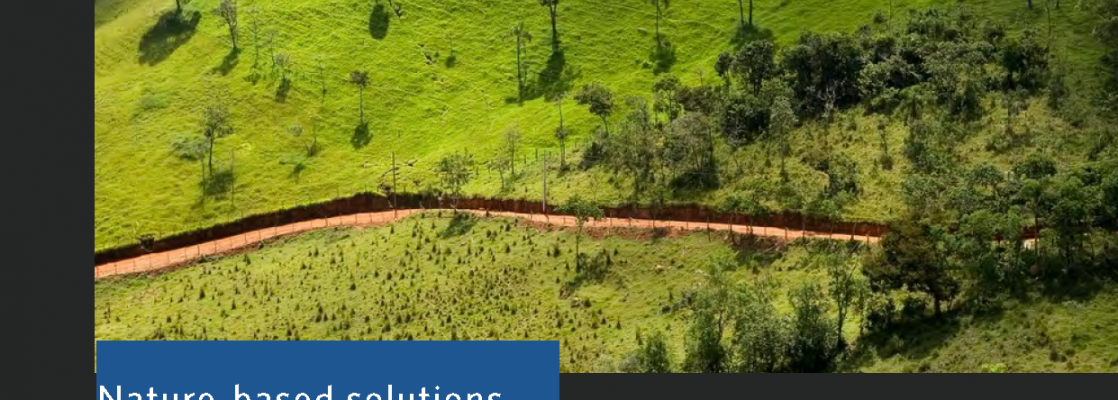
Agriculture Nature-based Solutions (Ag NbS) have high potential to help mitigate the negative effects of climate change and protect biodiversity in working landscapes around the world. However, relative to its potential, Ag NbS has not scaled-up. One barrier to scaling is that Ag NbS tend to be capital intensive, requiring significant amounts of public funding or private investment, or a blend of grants and investment capital.

Agricultural production system

Female farm­ers play a vital role in African agriculture, doing most of the work to produce, process, and market food. For instance, women produce 60-80 percent of the world’s food and in comparison, to men, face the burden of unpaid work, time elasticity, poor access to agricultural inputs as well as lower wages compared to their male counterparts. To better ad­dress their priorities and challenges, there is an urgent need to strengthen the voice and visibility of African women in the agricultural sciences.

Agricultural production system

There is a need for Africa to strongly embrace research and innovation to improve the food system’s performance. This can be achieved through sustainable financing of agricultural Research and Innovation (ARI).

Featured posts

featured

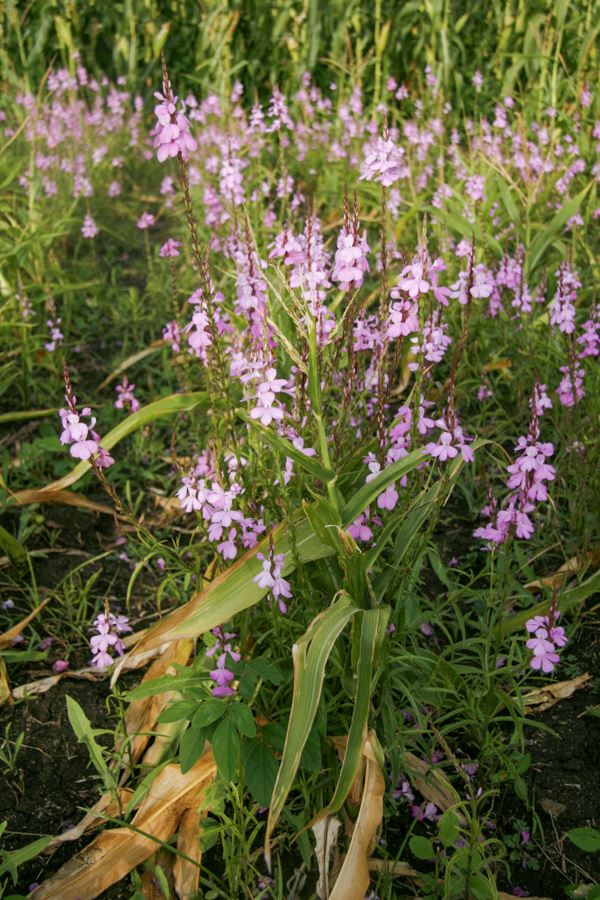
Striga weeds

Striga or 'witchweeds' are parasitic weeds that affect cereal crops in many parts of Africa, reducing production from 30 to 100%, or complete loss of the crop. If maize plants are attacked by both stemborers and striga weed, the yield... Continue Reading…

Twitter

🎉 #UPSCALE officially ended

Over 5 years, the project advanced push-pull technology for sustainable agriculture, food security, livelihoods and climate resilience in East Africa.

How to Push-Pull tutorials ⬇️

What really drives transformation in African economies? Is it better policies? More funding? Or something deeper?

On March 17, 2026, we converse with Joe Studwell, the author of 𝘏𝘰𝘸 𝘈𝘧𝘳𝘪𝘤𝘢 𝘞𝘰𝘳𝘬𝘴, to explore agriculture, policy sequencing, state capability, and what